Rear Brake Light Bulbs: P21W, P21/5W, Fitting and the Rules in New Zealand
In this guide
- What Does a Rear Brake Light Bulb Do
- Rear Brake Light Bulb Types and Codes
- Single Filament vs Dual Filament Brake Light Bulbs
- LED vs Halogen Rear Brake Light Bulbs
- How to Replace a Rear Brake Light Bulb
- New Zealand Rules for Rear Brake Lights
- Rear Brake Light Bulbs on Tractors and Agricultural Trailers
- Frequently asked questions
A rear brake light bulb is the 21W bulb that lights up red when the brake pedal is pressed, warning following traffic that the vehicle is slowing or stopping. Most cars, vans, tractors and trailers on New Zealand roads use either a P21W (382) single-filament bulb or a P21/5W (380) twin-filament bulb that also runs the tail light.
This guide covers both bulb types, how to tell which one you need, LED replacements, how to change the bulb, and what New Zealand rules and the Warrant of Fitness (WoF) and Certificate of Fitness (CoF) require. For tractors, including brake light switch faults and independent brake pedals, see our dedicated guide to tractor brake lights. Each bulb also has its own guide: the P21W 382 bulb and the P21/5W 380 bulb.
What Does a Rear Brake Light Bulb Do
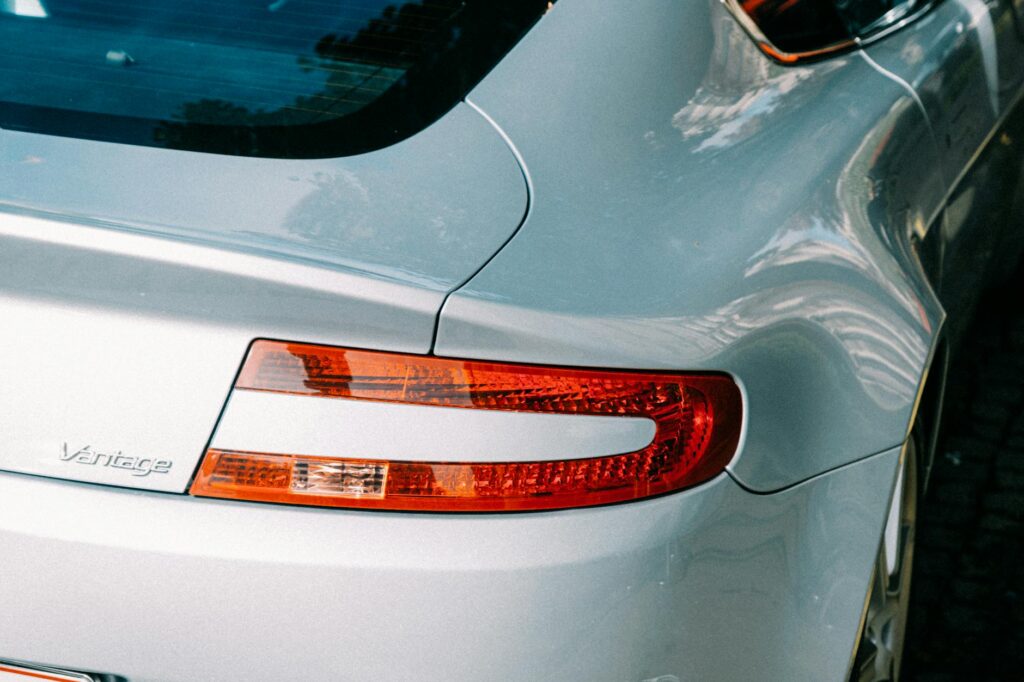
A rear brake light bulb illuminates when the driver presses the brake pedal, producing a bright red warning that tells following traffic the vehicle is slowing down or stopping. Most vehicles on the road carry at least 2 rear brake lights to communicate this single, critical piece of information: “I am braking.”
The rear brake light bulb operates on a simple circuit. A switch on the brake pedal (or a pressure switch in the brake hydraulics) closes the circuit when the brake is applied, sending current to the bulbs. Release the pedal and the circuit breaks. There is no dimming, no delay, and no manual switch.
A rear brake light bulb is rated at 21W, roughly 4 times the 5W of the rear position lamp (the dim red glow visible whenever the vehicle’s lights are on). A following driver needs to distinguish instantly between a vehicle ahead with its lights on and a vehicle that is actively braking. The difference in brightness provides that distinction.
Rear brake lights are separate from position lamps (continuous dim red for visibility), reverse lights (white, engaged in reverse gear), and rear fog lights (bright red, switched on manually in dense fog or falling snow). These functions often share the same rear lamp cluster, but each has its own bulb or filament and its own circuit.
Rear Brake Light Bulb Types and Codes
The 2 most common rear brake light bulbs are the P21W (trade code 382) and the P21/5W (trade code 380). Between them, these 2 bulbs cover the brake light function on the vast majority of cars, vans, tractors, and trailers on the road today.
P21W (Trade Code 382)
The P21W is a single-filament bulb rated at 21W. It handles the brake light function only. The base type is BA15s, which is a 15mm bayonet base with a single electrical contact at the bottom and 2 locating pins set level with each other on opposite sides. The P21W pushes into the socket and twists clockwise to lock.
The P21W is used in vehicles where the brake light and the rear position lamp are housed in separate sections of the rear lamp cluster, each with its own socket.
P21/5W (Trade Code 380)
The P21/5W is a dual-filament bulb with 2 separate filaments inside a single glass envelope. The thicker filament runs at 21W and powers the brake light. The thinner filament runs at 5W and powers the rear position lamp. The base type is BAY15d, a 15mm bayonet base with 2 electrical contacts at the bottom (one for each filament) and 2 locating pins set at different heights.
The offset pins ensure the bulb fits into the socket in only 1 orientation, connecting the 21W filament to the brake circuit and the 5W filament to the position lamp circuit. If the bulb could go in either way round, the brake and tail filaments could be swapped, giving a bright tail light and a weak brake light.
The P21/5W is used in vehicles where a single bulb serves both the brake light and the rear position lamp. This combined arrangement is the most common setup across cars, vans, and agricultural vehicles.
Quick Reference Table
| Bulb Type | Trade Code | Filaments | Wattage | Base | Function |
|---|---|---|---|---|---|
| P21W | 382 | 1 | 21W | BA15s (single contact, level pins) | Brake light only |
| P21/5W | 380 | 2 | 21W + 5W | BAY15d (dual contact, offset pins) | Brake light + position lamp |
| PR21W | n/a | 1 | 21W | BAW15s (angled pins) | Brake light (red glass) |
The PR21W is a red-glass version of the P21W, used in rear lamp clusters that have a clear or smoked outer lens where the bulb itself provides the red colour. Its angled pins stop it being swapped with a clear or amber bulb.
Single Filament vs Dual Filament Brake Light Bulbs
A single-filament rear brake light bulb (P21W) handles braking only, while a dual-filament bulb (P21/5W) combines the brake light and the rear position lamp in 1 bulb. The choice between them depends entirely on the design of the vehicle’s rear lamp cluster.
How to Tell Which Type Your Vehicle Uses
Remove the existing rear brake light bulb and look at it. A single-filament bulb has 1 filament inside the glass, 1 contact on the base and 2 pins at the same height. A dual-filament bulb has 2 filaments inside the glass, 2 contacts on the base and 2 offset (staggered) pins. The vehicle handbook also lists the bulb type for every lamp position, referenced by ECE code (P21W, P21/5W) or trade code (382, 380).
Why the Distinction Matters
Fitting a single-filament P21W into a dual-filament P21/5W socket does not work properly. The brake light may function, but the rear position lamp will not illuminate because the P21W has no second filament. A P21/5W will not seat properly in a P21W holder because of its offset pins and second contact, so never force it.
On vehicles with combined brake and tail light units (the majority), the rear brake light bulb is a P21/5W. On vehicles with separate brake and tail light sections, the rear brake light bulb is a P21W.
LED vs Halogen Rear Brake Light Bulbs
LED rear brake lights respond faster than filament bulbs because they have no filament to heat up before producing light. The difference is commonly put at up to about 0.2 seconds. At 100 km/h, 0.2 seconds is about 5.5 metres of travel for the driver behind. On a narrow rural road with a tractor pulling out of a field gateway, those metres matter.
Advantages of LED Brake Lights
LED rear brake lights offer 4 practical advantages over filament bulbs:
- Faster response time. An LED reaches full brightness almost instantly. A filament takes a fraction of a second to heat up and glow.
- Longer lifespan. A quality LED lamp lasts many times longer than a 21W filament bulb, which matters on a vehicle that sees daily use.
- Lower power draw. An LED stop light typically draws a few watts instead of 21W. This reduces the load on the vehicle’s electrical system, which is particularly relevant on tractors and older vehicles with limited alternator capacity.
- Vibration resistance. LEDs have no filament to break. Agricultural vehicles, trailers bouncing along farm tracks, and machinery operating on rough ground all subject bulbs to constant vibration. A filament is a thin wire suspended in a glass envelope. It breaks. An LED does not.
CANBUS Compatibility
Some vehicles (particularly modern cars with onboard diagnostics) monitor the current draw of each bulb circuit. When an LED draws a few watts instead of the expected 21W, the vehicle’s computer interprets the low current as a blown bulb and triggers a dashboard warning. This is a CANBUS or bulb-monitoring error, not a fault with the LED.
CANBUS-compatible LED bulbs include a built-in resistor that mimics the current draw of a filament bulb. Older tractors and most agricultural trailers have no bulb monitoring, so standard LED lamps usually work without warnings on farm vehicles. Some newer tractors do monitor lamp circuits, so check before buying.
Legal Position
Factory-fitted LED brake lights and complete aftermarket LED rear lamps that carry an E or e approval mark are road legal. Retrofit LED bulbs (an LED pushed into a lamp designed for a filament bulb) are a different matter: the lamp was approved with a filament bulb, and the LED bulb changes how it performs. The safe approach is to replace lamps like for like with approved units, and a brake light that is not working properly is a failure item at a WoF or CoF inspection. If you want LED brake lights, a complete approved LED rear lamp is the reliable route.
How to Replace a Rear Brake Light Bulb
Replacing a rear brake light bulb takes 5 to 10 minutes on most vehicles and needs little more than a screwdriver and a clean cloth. The procedure is the same for cars, vans, and tractors with enclosed rear lamp clusters.
Step-by-Step Guide
Step 1: Identify the correct bulb. Check the vehicle handbook or remove the existing bulb and read the code printed on the base. For most vehicles, the rear brake light bulb is a P21W (382) or P21/5W (380) at 12V. Some tractors and plant run 24V.
Step 2: Access the rear lamp cluster. On cars and vans, access is usually from inside the boot or tailgate. Open the boot and peel back the trim panel to expose the bulb holders. On some vehicles, the entire rear lamp unit unbolts from the outside (2 or 3 bolts). On tractors, rear lamp units are typically surface-mounted with the lens held on by 2 screws.
Step 3: Remove the bulb holder. Twist the bulb holder anticlockwise (roughly a quarter turn) and pull it straight out of the lamp cluster. The bulb comes out with the holder.
Step 4: Remove the old bulb. For a bayonet bulb (P21W or P21/5W), push the bulb in slightly, twist anticlockwise, and pull it out. For a wedge bulb, pull it straight out.
Step 5: Fit the new bulb. Push the new bulb into the holder and twist clockwise to lock. For a P21/5W, the offset pins ensure correct orientation. Do not force it. If the pins do not align, rotate the bulb 180 degrees.
Step 6: Refit and test. Push the bulb holder back into the lamp cluster and twist clockwise to lock. Ask someone to press the brake pedal while you watch the light from behind. If the vehicle uses a P21/5W dual-filament bulb, also check that the tail light (dim red) works with the sidelights turned on. Both filaments need to function.
Common Mistakes
Avoid touching the glass of a bulb with bare fingers. Oils from skin create hot spots that can shorten its life. Handle the bulb by its metal base or use a clean cloth.
On a dual-filament P21/5W, the brake filament can fail while the tail filament continues to work. The tail light glows normally, but the brake light does nothing. Always test both functions separately.
New Zealand Rules for Rear Brake Lights
Vehicle lighting in New Zealand is governed by the Land Transport Rule: Vehicle Lighting 2004 and related Land Transport Rules, administered by NZ Transport Agency Waka Kotahi (NZTA). Stop lamps are among the lamps vehicles must carry, and they must show red to the rear.
What the Rules Require for Farm Vehicles
Agricultural vehicles have their own provisions within the New Zealand rules. In general terms:
- Tractors and self-propelled machines: stop lamps are a standard part of a tractor’s road lighting (with headlamps, position lamps, rear lamps, indicators and number plate lighting, plus amber warning lamps where required). Requirements can differ with a machine’s speed, age and night use, so check NZTA Waka Kotahi’s agricultural vehicle guidance for yours.
- Agricultural trailers and towed equipment: need stop lamps, rear lamps, indicators and reflectors where the rules require them.
- Towed equipment without lights: if a baler, sprayer or similar hides the tractor’s stop lamps, a lighting board must be fitted.
- Older machines: some older agricultural vehicles have different lighting requirements, particularly if they are not used at night. Any lamps fitted must still work.
- Colour: red.
- Approval: fit like-for-like lamps that meet a recognised standard, such as the E or e mark, which is accepted in New Zealand.
On cars, the number, height and spacing of stop lamps (including the centre high-level lamp) are set by type approval when the vehicle is built. Any stop lamp that is fitted, including a high-level one, must work. See NZTA Waka Kotahi’s guidance on agricultural vehicles for the official detail.
WoF and CoF Inspections
Light vehicles such as cars and utes need a Warrant of Fitness (WoF), and heavy vehicles need a Certificate of Fitness (CoF). A non-working lamp, including an optional one that is fitted, is a failure item at both. A failed vehicle must be repaired and rechecked before a new WoF or CoF is issued, and faulty brake lights are among the common defects picked up at roadside checks.
Agricultural vehicles have their own inspection requirements, and many tractors do not need a regular WoF or CoF, but they must be safe and roadworthy whenever they are used on a public road. Check NZTA Waka Kotahi’s agricultural vehicle guidance for whether your tractor or trailer needs an inspection.
At a test or roadside check, the things to get right are:
- Every stop lamp lights when the brake is applied and goes out when it is released
- A steady red light, with no significant loss of brightness
- No lamp that stays on when the brake is released
- Lenses intact and clean, with no cracks letting in water or white light
- Secure mounting (the lamp unit must not be loose or at risk of detaching)
Penalties
Using a vehicle or trailer without working required lamps can lead to an infringement notice, and a vehicle with serious defects can be ordered off the road until it is fixed. NZ Police carry out roadside checks.
For agricultural vehicles on unlit rural roads, a following driver may have no other visual cue that the vehicle ahead is braking.
Rear Brake Light Bulbs on Tractors and Agricultural Trailers
Tractors and agricultural trailers use the same rear brake light bulb types as cars and vans, but fitment differs because of exposed lamp housings, higher vibration, and the choice between 12V and 24V electrical systems.
Tractor Brake Lights
Most tractors run 12V electrical systems and use standard P21W or P21/5W rear brake light bulbs. Some larger agricultural machines and plant run 24V. A 12V rear brake light bulb fitted to a 24V circuit will burn out almost immediately. A 24V bulb fitted to a 12V circuit will glow dimly and produce insufficient light to be safe or compliant.
Check the voltage before buying replacements. The voltage is printed on the bulb base (12V or 24V) and listed in the tractor’s operator manual.
In New Zealand, stop lamps are part of a tractor’s normal road lighting, and requirements for agricultural vehicles can vary with speed, age and night use, so check NZTA Waka Kotahi’s guidance for your machine. The tractor brake lights guide linked at the top of this page covers switch faults in detail.
Agricultural Trailer Brake Lights
Agricultural trailers connect their rear brake light bulbs to the towing vehicle through the towing socket. On both the 7-pin (12N) socket and the 13-pin socket, the brake light circuit is pin 6 (red cable). The trailer brake light illuminates whenever the tractor driver presses the brake pedal, provided the wiring is intact and the socket contacts are clean.
Trailer rear lamp units take significant punishment from road spray, slurry, loading impacts, and power washing. Corrosion in the bulb socket or the trailer plug is one of the most common causes of brake light failure on agricultural trailers, often more so than the bulb itself failing.
Practical Tips for Farm Vehicles
Keep a spare P21W and a spare P21/5W rear brake light bulb in the tractor cab. They take minutes to fit. A walk-around check before any road journey catches failed brake lights before they become an offence. On trailers, clean the towing socket contacts with electrical contact cleaner before silage season and apply dielectric grease to prevent corrosion.
LED rear lamps are a particularly good fit for agricultural trailers. No filament means vibration from rough tracks does not cause premature failure. The lower power draw reduces the load on the tractor’s alternator. And the faster response time gives following traffic extra warning, which matters when a loaded grain or silage trailer takes a long time to stop.
Browse rear lamps at Agri Lighting for complete rear lamp units and LED upgrades, or our bulb range for replacement P21W and P21/5W bulbs. Shipped from the UK and priced in NZ dollars, with free delivery to New Zealand on orders over NZ$500 (any NZ GST, duty or Customs fees are paid on delivery).
Frequently asked questions
Is a brake light bulb a 380 or a 382?
It depends on the lamp. A 382 (P21W) is a single-filament bulb used where the brake light has its own socket. A 380 (P21/5W) is a twin-filament bulb that runs both brake and tail lights. Check the old bulb: 1 contact on the base means 382, 2 contacts and offset pins mean 380.
Why is my brake light not working when the bulb is fine?
If both brake lights are out, suspect the brake light switch or fuse. If 1 side is out with a good bulb, check the bulb holder for corrosion and the earth connection. On a trailer, check pin 6 in the plug and socket.
Can I fit LED brake light bulbs?
LED replacement bulbs fit the same sockets, but a lamp designed for a filament bulb was approved with one. The safest legal upgrade is a complete LED rear lamp carrying an E or e approval mark. Cars with bulb monitoring may also need CANBUS-compatible LEDs.
Is it illegal to drive with a broken high-level brake light?
A fitted lamp that does not work is a failure item at a WoF or CoF inspection, and a broken stop lamp can be picked up by NZ Police at a roadside check. Fix a dead high-level brake light as soon as possible.
Does my tractor need brake lights in New Zealand?
In most cases, yes, for a tractor used on public roads. Requirements for agricultural vehicles can vary with speed, age and whether the machine is used at night, so check NZTA Waka Kotahi’s agricultural vehicle guidance for your tractor. Any stop lamps fitted must work.