Tractor Tail Lights and Rear Lighting: What NZ Law Requires
In this guide
- What Are Tractor Tail Lights
- NZ Legal Requirements for Tractor Rear Lighting
- Components of a Tractor Rear Lighting Cluster
- Tractor Tail Light Types: Bulb, LED, and Combination Units
- How to Replace Tractor Tail Lights
- Common Tractor Tail Light Faults and Fixes
- Trailer Rear Lighting Requirements
- Tractor Rear Lighting Compliance Checklist
Tractor tail lights are the red rear-facing lamps that make an agricultural tractor visible to following traffic during darkness, dusk, and poor weather. Any tractor driven on a New Zealand public road must have working rear lighting that meets the Land Transport Rule: Vehicle Lighting 2004 and NZTA Waka Kotahi’s agricultural vehicle rules. A tractor without functioning tail lights is illegal on the road and presents a serious collision risk, particularly on unlit rural roads where closing speeds between farm vehicles and other traffic can exceed 60 km/h. This article covers every rear lighting component the law requires, the types of tractor tail light available, how to replace them, and the faults that put farmers on the wrong side of the regulations.
What Are Tractor Tail Lights
A tractor tail light is a red, continuously illuminated rear lamp that shows the presence and width of a tractor to drivers approaching from behind. Tractor tail lights operate whenever the sidelights or headlights are switched on. They are distinct from brake lights (which activate only when the brake pedal is pressed), indicators (which flash amber), and rear fog lights (which are higher intensity and used only in severely reduced visibility).
Tractor tail lights serve two functions. The first is making the tractor visible during the hours of darkness, which New Zealand rules treat in general as the period from half an hour after sunset to half an hour before sunrise, plus any other time visibility is poor. The second is providing a constant point of reference that helps following drivers judge distance and closing speed. On a narrow rural road after dark, a pair of red tractor tail lights may be the only warning a car driver has that a slow-moving vehicle is ahead.
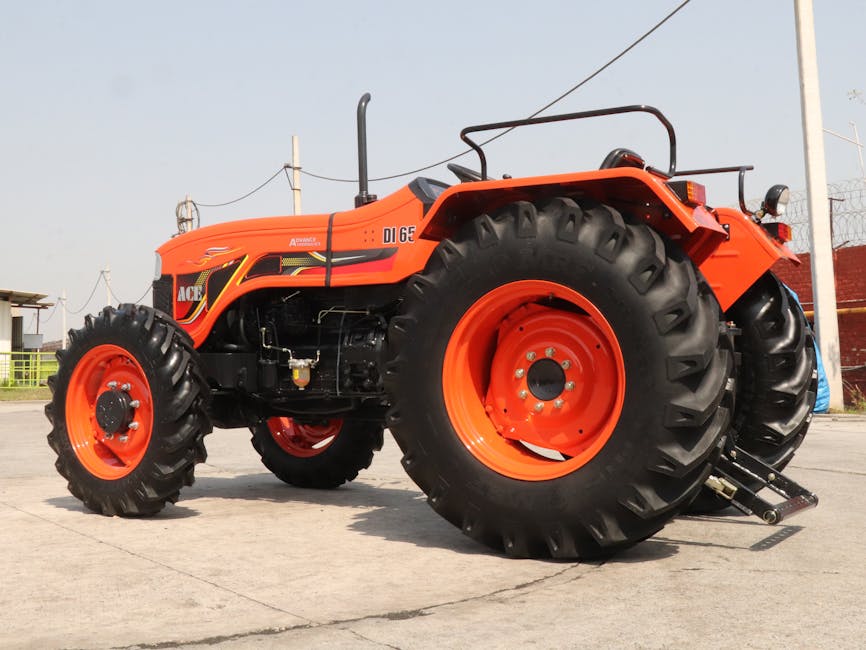
Most modern tractors mount tractor tail lights within a rear lighting cluster that also houses the brake light, indicator, rear fog light, and reversing light. Older tractors often use separate individual lamps bolted to the mudguards or rear fender.
NZ Legal Requirements for Tractor Rear Lighting
The rear lighting requirements for a tractor used on New Zealand public roads come from the Land Transport Rule: Vehicle Lighting 2004 and related Land Transport Rules, administered by NZ Transport Agency Waka Kotahi (NZTA). Agricultural vehicles have their own treatment under these rules, and the exact list depends on the tractor’s age, speed and how it is used, so check NZTA Waka Kotahi’s agricultural vehicle guidance for your machine. For a modern tractor used on the road, the rear lighting normally includes the following.
Mandatory Rear Lights
- 2 red rear position lights (tail lights): One on each side, showing red to the rear. These are the core tractor tail lights and must be lit whenever the vehicle is on a road during the hours of darkness.
- Brake lights (stop lamps): Fitted to modern tractors and required in many cases; check the NZTA rules for older or slower machines. Brake lights emit red light when the brake pedal is pressed and must be visible in normal daylight.
- Amber direction indicators: Fitted to modern tractors and required in many cases. Indicators should flash at the standard rate of 60 to 120 flashes per minute.
- 2 red rear reflectors: One on each side, positioned symmetrically, kept clean and unobscured. Rear reflectors are passive (they reflect light from other vehicles’ headlights rather than producing their own). They provide visibility even if the tractor’s electrical system fails entirely.
- Number plate light: A white light that illuminates the rear registration plate Where the tractor carries a rear plate, it must be clearly legible at night.
- Rear fog light: Not on the obligatory list for tractors, but most modern tractors have one. If fitted it must work, and where only one is fitted it is normally on the right-hand side.
For a full breakdown of all tractor lighting regulations, including front lighting and exemptions, see the dedicated regulations article.
Reversing Light
A white reversing light is not mandatory on tractors, but most modern tractors are fitted with one. Where fitted, it must emit white light and activate only when reverse gear is engaged.
Exemptions and Older Tractors
Older tractors, and tractors used only in daylight, can have fewer lighting requirements under New Zealand rules, so check NZTA Waka Kotahi’s current rules if your tractor is old or rarely leaves the farm. Older vehicles that have lights fitted must keep them working. Even on a tractor with fewer requirements, fitting modern tractor tail lights and additional rear lighting is a practical safety decision that costs relatively little.
Components of a Tractor Rear Lighting Cluster
A tractor rear lighting cluster contains up to 7 individual tractor tail light and signalling components, each with a specific function and legal requirement. Understanding what each component does helps identify which part has failed when a light stops working.
Tail Light (Red, Continuous)
The tail light is the primary tractor tail light. It produces a low-intensity red glow (typically 5W with a filament bulb) that runs continuously when the sidelights or headlights are on. Its job is presence marking, not signalling.
Brake Light (Red, On Demand)
The brake light produces a brighter red output (typically 21W) when the brake pedal is pressed. The brightness difference between the tail light at 5W and the brake light at 21W is what alerts following drivers to braking. Some tractor tail light clusters use a dual-filament bulb (P21/5W, also called a 380 bulb) that combines both tail and brake functions in a single lamp. For more on stop lamp bulb types, see the guide to rear brake light bulbs.
Indicator (Amber, Flashing)
The indicator produces an amber flashing signal at 60 to 120 flashes per minute. On tractors, indicators are typically mounted within the rear cluster or as separate round or rectangular lamps on the rear fender. A P21W (21W) bulb is standard for filament indicators.
Rear Reflector (Red, Passive)
The rear reflector is a red, passive optical element that reflects light from other vehicles’ headlamps back towards the source. Rear reflectors on a tractor tail light cluster require no power and no wiring. They provide a failsafe level of rear visibility if the tractor’s electrical system fails or if the engine is off.
Number Plate Light (White)
The number plate light illuminates the rear registration plate with white light. It is typically a small, separate lamp mounted above or beside the plate. A 5W R5W bulb or a small LED module is standard. The number plate must be clearly legible in darkness.
Rear Fog Light (Red, High Intensity)
The rear fog light is a high-intensity red lamp (21W filament or 1W to 3W LED). Fog lights are for poor visibility such as fog or falling snow, and should be switched off once visibility improves. It is brighter than a standard tractor tail light to cut through fog, and that brightness dazzles following drivers in clear weather. A rear fog lamp is not on the obligatory list for tractors, but a fitted fog lamp must work.
Reversing Light (White, Reverse Gear Only)
Where fitted, the reversing light produces white light to illuminate the area behind the tractor and to warn others that the vehicle is about to move backwards. It activates automatically when reverse gear is selected.
Tractor Tail Light Types: Bulb, LED, and Combination Units
Tractor tail lights are available in three main formats. The table below compares them across the factors that matter most for agricultural use.
| Feature | Traditional Filament Bulb | LED | Combination Unit (LED) |
|---|---|---|---|
| Brightness | 50 to 460 lumens (depending on bulb wattage) | 50 to 500+ lumens | 50 to 500+ lumens per function |
| Lifespan | 1,000 to 2,000 hours | 30,000 to 50,000 hours | 30,000 to 50,000 hours |
| Power draw (tail function) | 5W to 21W | 0.5W to 5W | 0.5W to 5W per function |
| Response time | About 200 milliseconds (filament warm-up) | Under 1 millisecond (near-instant) | Under 1 millisecond |
| Vibration resistance | Low (filament breaks under sustained vibration) | High (no filament) | High |
| Typical price | Roughly NZ$4 to NZ$25 per bulb | Roughly NZ$25 to NZ$90 per lamp | Roughly NZ$60 to NZ$185 per cluster |
| Best suited for | Older tractors, quick like-for-like replacement | Upgrade for any tractor, trailers | Modern retrofits, new installations |
Traditional Filament Bulbs
Filament bulb tractor tail lights use standard automotive bulbs (R5W for tail lights, P21W for brake and fog lights, P21/5W for dual tail/brake). They are inexpensive, universally available, and fit existing lamp housings without modification. The drawback is lifespan: constant vibration from field work and road travel shortens filament life, and bulb failures on tractors are common.
LED Tractor Tail Lights
LED tractor tail lights draw a fraction of the power, last 15 to 50 times longer than filament bulbs, and respond up to about 200 milliseconds faster. The faster response time means following drivers see the brake signal sooner, which at 100 km/h gives roughly 5 metres of extra stopping distance. LED tractor tail lights also resist vibration better because they have no filament to fracture. For tractors that spend long hours on rough terrain, LED is the more reliable option.
Combination Rear Lamp Units
A combination rear lamp unit integrates multiple tractor tail light functions (tail, brake, indicator, fog, reflector, and sometimes reversing light) into a single sealed housing. Combination units simplify wiring (one connector instead of 5 or 6 individual lamps), reduce the number of mounting points, and provide a uniform appearance. Most aftermarket combination units are LED and come in rectangular or round formats to suit different tractor models. They are the standard choice for new lighting installations and for tractors where the original rear lighting is beyond economical repair.
How to Replace Tractor Tail Lights
Replacing a tractor tail light takes 10 to 30 minutes, depending on whether the tractor uses individual lamps or a combination cluster. The process requires basic hand tools: a screwdriver, a socket set (typically 10 mm or 13 mm), and a multimeter or test lamp for verification.
Step-by-Step Replacement
-
Identify the housing type. Check whether the tractor uses separate individual lamps bolted to the fender or a combination rear cluster. This determines whether a single bulb swap or a full unit replacement is needed.
-
Check the voltage. Most tractors run a 12V electrical system. Some larger machines (particularly those with 24V starter systems) use 24V lighting. The voltage is printed on the existing bulb or stamped on the lamp housing. Fitting a 12V tractor tail light to a 24V system will burn the bulb out immediately.
-
Disconnect the battery or isolate the circuit. Switch off the ignition and disconnect the battery’s negative terminal, or remove the relevant fuse from the fuse box. This prevents short circuits during the swap.
-
Remove the old lamp or bulb. For individual lamps: undo the mounting bolts and disconnect the wiring connector. For bulb replacement within a cluster: remove the lens or access cover, twist the bulb holder anticlockwise, and pull the old bulb out of its bayonet fitting.
-
Fit the new tractor tail light. Insert the replacement bulb (push in, twist clockwise until it clicks) or bolt the new lamp unit into position. Ensure the wiring connector seats fully and any rubber gaskets or seals are in place to prevent water ingress.
-
Reconnect and test every function. Reconnect the battery, switch on the sidelights, and confirm the tractor tail light illuminates. Press the brake pedal to check the brake light. Activate each indicator. Switch on the rear fog light. Check the number plate light and reversing light (if fitted). Have a second person stand behind the tractor to confirm all lights are visible, the correct colour, and functioning at the correct intensity.
E-Mark Approval
The safe rule is to replace lamps like-for-like with approved units, and an E or e mark is the easiest proof. This mark confirms the lamp meets the UN ECE type-approval standard for light output, colour, and beam pattern. Unapproved lamps can fail a roadside inspection and may not provide adequate visibility. Check for the E-mark (a letter E inside a circle, or a lower-case e in a rectangle, followed by a number) on the lens or housing before fitting. E-mark approval is accepted in New Zealand, as are some other recognised standards such as SAE and Australian Design Rules.
Common Tractor Tail Light Faults and Fixes
Tractor tail light failures fall into 5 common categories. Most are straightforward to diagnose and repair without specialist equipment.
Dim Tractor Tail Lights
A dim tractor tail light is caused by voltage drop across corroded wiring, a dirty or discoloured lens, or an aged filament bulb nearing the end of its life. Clean the lens with warm soapy water. Check for corroded or loose wiring connections between the battery and the lamp. If the bulb filament looks thin or blackened inside the glass, replace the bulb. On older tractors, voltage drop across long cable runs is common; running a new earth wire directly from the lamp housing to a clean chassis point often restores full brightness.
Water Ingress
Water inside a tractor tail light housing causes bulb failure, corrosion, and reduced light output. The most common entry points are cracked lenses, perished rubber gaskets, and missing or damaged grommets where wiring enters the housing. Replace cracked lenses immediately. Reseal gaskets with a thin bead of silicone sealant if the original rubber has hardened. When fitting new tractor tail light units, choose lamps rated to at least IP67 (protected against temporary immersion in water up to 1 metre) for agricultural use.
Corroded Contacts
Green or white deposits on tractor tail light bulb contacts and socket terminals indicate corrosion. This creates high electrical resistance, which causes dim or intermittent operation. Remove the bulb, clean the contacts with fine abrasive paper or a brass wire brush, and apply a thin coat of dielectric grease to prevent moisture from re-entering. For bullet or spade connectors, disconnect, clean, re-crimp if necessary, and apply grease before reconnecting.
Blown Fuses
A blown fuse in the tractor tail light circuit cuts power to one or more rear lamps. Check the fuse box (usually located under the dashboard or behind a panel in the cab) for the rear lighting fuse. A blown fuse appears as a broken wire element visible through the translucent fuse body. Replace with a fuse of the same amperage rating. If the replacement fuse blows again immediately, the circuit has a short. Inspect the wiring for chafed insulation where cables pass through metal panels or near moving parts.
Earth Faults
An earth fault (poor ground connection) causes tractor tail lights to flicker, glow dimly, or cross-feed between circuits (pressing the brake causes the indicators to glow, for example). Earth faults are the most common cause of erratic tractor tail light behaviour. Check the earth wire from the lamp housing to the chassis. Scrape away paint or corrosion at the earth point to expose bare metal, reattach the earth wire with a clean bolt and star washer, and apply grease to seal the connection against moisture. On tractors where the tail light earths through the mounting bolts, clean the contact surfaces between the lamp bracket and the tractor body.
Trailer Rear Lighting Requirements
A tractor towing a trailer on a public road must ensure that working rear lights are visible on the rearmost vehicle in the combination. When a trailer obscures the tractor’s own tail lights, the trailer must display its own complete set of rear lighting.
Minimum Trailer Rear Lighting
An agricultural trailer used on the road normally needs rear lamps, stop lamps, direction indicators and red rear reflectors (normally triangular on trailers), kept clean and working. Larger trailers and long combinations can also need side marker lamps or reflectors, so check NZTA Waka Kotahi’s rules for the exact requirement for your trailer. All trailer rear lights receive their power from the tractor through the towing socket.
Towing Socket Wiring
The standard 7-pin towing socket (ISO 1724) allocates pin 2 to the rear fog light, pin 5 to the right-hand tail light, and pin 7 to the left-hand tail light. A 13-pin socket (increasingly common on modern tractors) adds dedicated circuits for reversing lights and a permanent 12V feed. When a tractor tail light on the towing vehicle works but the corresponding trailer light does not, the fault is usually a corroded pin in the towing socket or a broken wire in the trailer’s umbilical cable.
Lighting Boards for Wide Implements
As a rule, towed equipment without its own lights (balers, sprayers, rakes and similar) needs a lighting board if it hides the tractor’s own front or rear lamps or reflectors. The lighting board should carry the rear lights the tractor itself needs (tail lights, reflectors, indicators, brake lights and the number plate light), with the outer lamps close to the widest points of the implement. Lighting boards connect to the tractor through the towing socket. Check all tractor tail light functions on the lighting board before setting off on a public road.
For a full guide to tractor road legal lights, including front and side requirements, see the dedicated article.
Tractor Rear Lighting Compliance Checklist
Use this checklist before every road journey to confirm that all tractor tail lights and rear lighting components are working and road-legal.
- [ ] 2 red tail lights: Both lit when sidelights/headlights are on, one each side, visible from behind.
- [ ] Brake lights: Both illuminate when the brake pedal is pressed. Brightness is noticeably higher than the tail lights.
- [ ] Amber indicators: Both flash at a steady, even rate (60 to 120 flashes per minute). Left and right operate independently.
- [ ] 2 red rear reflectors: Clean, undamaged, and securely mounted. One on each side, positioned symmetrically.
- [ ] Number plate light: White light illuminates the registration plate. Plate clearly legible.
- [ ] Rear fog light: Where fitted, works when switched on and the dashboard indicator lights. Switched off unless there is dense fog or falling snow.
- [ ] Lenses: No cracks, no discolouration, no water inside the housing.
- [ ] Wiring and connectors: No exposed or chafed cables. Connectors seated fully. Earth connections clean and tight.
- [ ] Trailer lights (if towing): Tail lights, stop lamps, indicators and number plate light all working on the trailer. Towing socket pins clean. Lighting board fitted for wide implements.
- [ ] Amber beacon: Fitted and working, and switched on for the road journey where the NZTA rules require it.
- [ ] E-mark: All replacement tractor tail lights and lamps carry a visible E or e approval mark.
A tractor tail light check takes under 5 minutes and requires nothing more than a second person to confirm each light from behind. A missing required lamp can mean an infringement fee, and the cost of a Police stop or a collision caused by invisible rear lighting is far greater than the time spent checking.
Browse the full range of tractor tail lights at Agri Lighting, including LED combination units, individual rear lamps, and replacement bulbs, with free delivery to New Zealand on orders over NZ$500. Prices are in NZ dollars, orders ship from the UK, and any NZ GST, duty or Customs fees are paid on delivery. For a broader overview of all tractor lighting options, visit the pillar guide.